



























4.8145 reviews Tap water in Austria · as of 2026

Forever chemicals and microplastics: what’s in Vienna’s tap water? Since 2026, testing for forever chemicals has been required for the first time.

  • TFA, a forever chemical, is present in 54 of 55 drinking water samples from Austria, including Vienna. Limit value: none.
  • Drug residues: no limit value in the Austrian Drinking Water Ordinance.
  • Microplastics: no limit value. An EU measurement method has only existed since 2024.
  • Lead pipes in pre-war (Altbau) buildings: the building owner is responsible for those, not the city.

We test your tap water for free, at your home in Vienna, and show you how to protect yourself.

Worth about €80, free for you Result on the spot No obligation
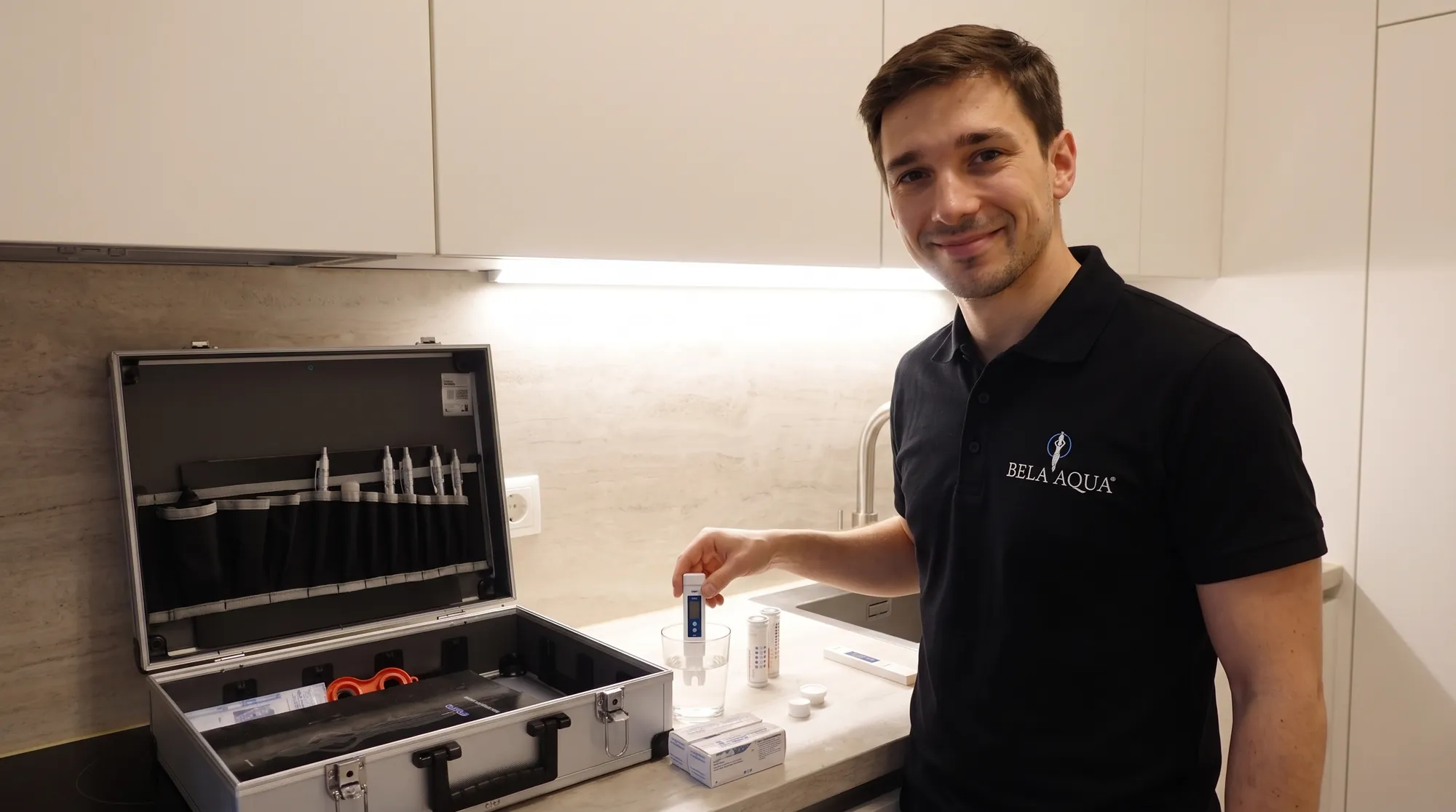
Christoph Speiser carrying out a water test in a kitchen: meter in a glass of water, with test strips and the test kit beside it
Christoph SpeiserWe test your drinking water
GLOBAL 2000 measurement · May 2026 TFA in Vienna’s tap water Avg. 0.63 µg/l Limit value in Austria: none
What’s happening now

In 2026, Austria is taking a close look. Much of it is still unregulated.

  1. 17 September 2020

    PFAS: safe intake exceeded

    The EU food safety authority EFSA sets a tolerable weekly intake for four PFAS: at most 4.4 nanograms per kilogram of body weight per week. Its finding: parts of the European population are above it, and that is a concern.

    EFSA Journal 2020, doi:10.2903/j.efsa.2020.6223
  2. March 2024

    Microplastics: only a measurement method so far

    For the first time, the EU sets out how microplastics in drinking water are to be measured. There is still no limit value today.

    Delegated Decision (EU) 2024/1441
  3. 12 January 2026

    First PFAS limit value

    Austria now has a limit value for forever chemicals in drinking water for the first time: 0.1 µg/l for the sum of 20 PFAS. From now on, testing for them is required.

    Austrian Drinking Water Ordinance (TWV); Province of Upper Austria, PFAS testing information (in German)
  4. 5 May 2026

    TFA in 54 of 55 samples

    GLOBAL 2000 finds the forever chemical TFA almost everywhere, averaging 0.63 µg/l in Vienna. AGES also found TFA in 307 of 331 drinking water samples from across Austria in 2025, with a highest value of 6.03 µg/l. TFA is not one of the 20 regulated PFAS. Limit value: none.

    GLOBAL 2000, TFA in drinking water (in German); AGES, TFA monitoring 2025 (in German)
  5. June 2026

    “Toxic to reproduction”

    A committee of the EU chemicals agency ECHA recommends classifying TFA as toxic to reproduction, with the hazard statement “May damage the unborn child”. EFSA considers up to 0.014 mg per kilogram of body weight per day to be safe. The committee also classes TFA as very persistent and very mobile: it stays in water for a long time and spreads widely.

    ECHA, Committee for Risk Assessment; EFSA; both according to AGES
  6. Today

    And your tap?

    76 of 86groundwater monitoring sites with drug residues

    There is no limit value for them in drinking water. Nobody tests the water at your tap unless you ask them to.

    Umweltbundesamt (Environment Agency Austria) on behalf of the Austrian Ministry of Agriculture (BML), 2020 report (in German): measured in 2018 at deliberately chosen sites near possible wastewater inputs, mostly very small amounts.Book your free water test
Greater Vienna · as of 2026

Your water on the map. Incidents, lead and TFA near you.

The water’s journey
I. mountain spring pipeline II. mountain spring pipeline partly I., partly II. Surrounding area: soft medium hard no data Drinking water incident Spring / waterworks TFA in µg/l: under 0.5 to over 2.5 High share of older buildings medium low
1873
The year the First Vienna Mountain Spring Pipeline began supplying the city
180 km
is the length of the route from the Hochschwab through the Second Vienna Mountain Spring Pipeline
36 hrs
for the water to travel from the Hochschwab to Vienna
3,000+ km
of public water mains distribute it across the city
And then?

Wiener Wasser is responsible up to the water meter. From there, your building takes over.

Wiener Wasser, the city’s water utility, continuously publishes its readings from the mains and waterworks. The building owner is responsible for the last few metres: the risers and the pipes in your flat. Nobody tests at your tap unless you ask them to.

Get your water tested

Sources: incidents since October 2021 according to media reports and official notices (source for each incident on the map); TFA: GLOBAL 2000, TFA in drinking water (in German; May 2026, average per plant); surrounding area: EVN Wasserwerte (water values, in German) and municipal websites; photos: Wikimedia Commons (author credited for each photo). City of Vienna, Wiener Wasser: Pipe network and supply areas (in German; as of 12 October 2025), Current drinking water values (in German; analyses of 3 to 6 August 2026), Water hardness (in German); district boundaries data.wien.gv.at (CC BY 4.0). Route of the pipelines shown in simplified form.

The last few metres

Vienna’s tap water has a good reputation. Only what is regulated gets tested.

Spring water from the Schneeberg and the Hochschwab flows into the pipeline. Wiener Wasser publishes its measurements on an ongoing basis, and they are good. We say that openly.

But you don’t drink at the Hochschwab.

TFA, drug residues, microplastics: the Austrian Drinking Water Ordinance sets no limit value for them. And even the best spring water has a long journey behind it before you drink it: up to 180 kilometres through the mountain spring pipeline, then through Vienna’s pipe network, which is over 3,000 kilometres long in total. And finally through the pipes in your building.

Those last few metres no longer belong to the city. They belong to the building owner. How old they are, what they are made of and what collects in them overnight: nobody checks that for you on their own initiative.

The main problem of lead contamination in drinking water lies in the lead plumbing of Gründerzeit [late 19th-century] buildings. […] There is therefore a risk that the last section of pipe to the consumer is made of lead.
City of Vienna, Wiener Wasser · “Blei im Trinkwasser” (Lead in drinking water, in German), wien.gv.at

Do you know what the pipes in your flat are made of?

Many people don’t. They’ve never asked. Why would they? The water is clear.

And if something has no limit value, nobody has to test for it routinely.

The question is not how good Vienna’s water is at the source. The question is what arrives at your tap.
I looked it up

What does the Austrian Drinking Water Ordinance actually regulate?

That is exactly what I wanted to know. Out of personal interest, I read up on the Austrian Drinking Water Ordinance. In short: some substances have clear limit values, and others have none at all.

With a limit value

  • Germs such as E. coli0
  • Nitrate50 mg/l
  • Lead10 µg/l
  • 20 PFAS, since 12 January 20260.1 µg/l

Without a limit value

  • TFA, not one of the 20 PFASno limit value
  • Drug residuesno limit value
  • Microplasticsno limit value

Austrian Drinking Water Ordinance (TWV), Annex I, version of 18 October 2026 (RIS, in German). Lead: transitional value of 10 µg/l until 12 January 2036, then 5 µg/l.

My conclusion: what has a limit value gets tested. For much of what is found in water today, there is no limit value yet.

That is why I do this.

Christoph Speiser, Bela Aqua consultant for Vienna and the surrounding area

We drink water every day, more than anything else. After reading my way through regulations and studies, there was one thing I wanted to know above all: What comes out of the tap at my home? And what does my family drink every day?

You only get the answer from a measurement at your own tap. That is why I come to your home and measure your water where you drink it: directly at your tap. It is free, and I explain every value to you. What you do with the result afterwards is up to you.

Christoph SpeiserYour Bela Aqua consultant for Vienna and the surrounding area

Which of these are in your water?

Free, with no obligation. We measure right at your tap, and you see the result straight away.

Book your free water test
The solution

Reverse osmosis holds back dissolved substances too. How a reverse osmosis system works.

And if you want to change something? For dissolved substances such as TFA, the German Environment Agency (Umweltbundesamt) points to processes such as reverse osmosis.

The principle

How reverse osmosis works

In a reverse osmosis water filter, a pump presses tap water against an ultra-thin membrane. Water molecules pass through. Whatever is dissolved in the water stays behind at the membrane and is carried continuously to the drain with a little flush water, instead of building up in the filter. The same process is used worldwide to turn seawater into drinking water.

  1. PressureThe pump raises the water pressure.
  2. MembraneOnly water molecules get through.
  3. FlushingWhat is held back flows to the drain.

Simplified diagram. Inside the unit, the membrane is wound up in a cartridge to save space.

How fine is that?

A virus is 40 to 400 times larger than a pore in the membrane.

The membrane has pores of about 0.4 to 0.9 nanometres. A nanometre is one millionth of a millimetre. Viruses are mostly 20 to 200 nanometres in size, bacteria 2 to 3 micrometres, microplastics up to 5 millimetres.

Logarithmic scale. Sources: pores: Wang et al. 2023, Science Advances (PMC10104469); viruses and bacteria: Louten 2016, Essential Human Virology (PMC7150055); microplastics: EU definition, Regulation (EU) 2023/2055.

What studies show

What reverse osmosis removes from water

Figures from independent studies and tests of other units, not a measurement of the OBLIGE. The water test shows what is in your water.

Lead · Arsenic · Nitrate
up to 99%
Lead
99%Arsenic
97%Nitrate
87%

In a test to the US standard NSF/ANSI 58, an under-sink unit reduced lead by an average of 99%, pentavalent arsenic by 97% and nitrate by 87%.

Performance data sheet Microline TFC-435, California State Water Resources Control Board (PDF)
Parasite cysts
99.99%

In the same test, 99.99% of cysts from parasites such as Giardia and Cryptosporidium were retained.

Performance data sheet Microline TFC-435 (PDF)
PFAS, forever chemicals
up to 100%

All the under-sink reverse osmosis units tested in households removed almost all of the PFAS examined. Depending on the substance and region, removal ranged from over 75 to 100 per cent.

Herkert et al. 2020, Environ. Sci. Technol. Letters (Duke University); ranges according to Teymoorian et al. 2024
TFA, the smallest forever chemical
0.63 µg/l

TFA in Vienna’s tap water, average of the GLOBAL 2000 samples (5 May 2026). A small amount, but TFA hardly breaks down in the environment, and there is no limit value.

According to Germany’s Umweltbundesamt, TFA can be removed from water to a relevant extent “only by … processes such as reverse osmosis”.
GLOBAL 2000, TFA in drinking water (in German), May 2026; Umweltbundesamt (Germany), FAQ on trifluoroacetate (in German), 26 June 2026
Drug residues
over 85%

At a waterworks with reverse osmosis and nanofiltration, retention was over 85% for almost all the active substances examined. Retention was weaker for paracetamol, for example, at 45 to 73%.

Radjenović et al. 2008, Water Research (DOI)
Minerals too
95%

Reverse osmosis also holds back calcium and magnesium. The content of dissolved substances fell by 95% on average in the test. That is why the OBLIGE Minerale adds minerals back afterwards.

Performance data sheet Microline TFC-435, total dissolved solids (TDS)

No process removes everything. How well a system performs also depends on maintenance and filter changes.

What would a system have to achieve in your home?

Free, with no obligation. We measure right at your tap, and you see the result straight away.

Book your free water test
My mission

I was looking for the best solution for the water in our own home. That is how I came across Bela Aqua.

I looked at what really helps and what only sounds good. What won me over was a family business that develops its own filters and has specialised in pure water for 19 years.

Today, it is my passion to help people in Vienna and the surrounding area get pure water from their own tap. With an honest measurement first and a recommendation only afterwards.

Christoph Speiser

Bela Aqua

Manufacturer, market leader, family business. Pure water for 19 years.

Head office of Bela Aqua GmbH in Zusmarshausen
TOP 100 Top Innovator 2022Bela Aqua head office in ZusmarshausenAwarded TOP 100 Innovator 2022

Günter Brandl founded Bela Aqua. Today the Brandl family runs the company, with its own head office in Zusmarshausen near Augsburg and a service network in Germany and Austria.

In 2022, Bela Aqua was named a TOP 100 Innovator. In 2020 and 2021, the company invested around €1.6 million. Bela Aqua developed the 3-in-1 combination filter itself.

In Vienna and the surrounding area, your Bela Aqua consultant comes to your home, measures your water and explains the result. Whether you need anything afterwards is up to you.

Christoph SpeiserYour Bela Aqua consultant for Vienna and the surrounding area

19
Years of experience with reverse osmosis
50,000+
Customers trust Bela Aqua
4.8 ★
on Google from 145 reviews
TOP 100
Innovator 2022
Companies that trust Bela Aqua water
WiesbauerLeo HillingerREWEIntersportAIDA CruisesHankookDie JohanniterMHK GroupGraf ZerspanungstechnikLangbehn ElektrotechnikAutohaus Zanker
Abel + Rufconform IT-SystemhausUTT Technische TextilienKlotzGlobal Brand ConceptsAFS FahrradlandWEHbike-n-funSchwaben RecyclingUmweltDruckhausFeha Büro-Technik
★★★★★
“I have now been drinking the filtered water from the Bela Aqua system for about 5 months and I am delighted every single day by its purity and its excellent taste. […] I would also like to give great praise to the installer. He connected the water filter system quickly and safely!”
S. R.Private customer
★★★★★
“We have switched our entire company to Bela Aqua water dispensers, and with this solution we save ourselves a great many plastic bottles …”
Ludwig ZankerManaging director, Mercedes Autohaus Zanker
★★★★★
“We are very pleased, the water tastes really good, the children are going to love it!”
Martin HippeLebenshilfe Braunschweig, Kindergarten Hasenwinkel
★★★★★
“We didn’t want to carry crates of water any more …”
Thomas RätzkeUmweltdruckhaus Hannover
★★★★★
“We are very happy with our 3 new water dispensers! …”
Hankook ReifenDeutschland GmbH
★★★★★
“We are completely satisfied. Cheers, and thank you very much!”
Jörn H. HamannManaging director, conform IT-Systemhaus

Customer reviews taken from the references of Bela Aqua GmbH (bela-aqua.de, private and business customers). Some of the business customers use Bela Aqua water dispensers. Reviews translated from German.

Get to know us in person, at your home.

Free, with no obligation. We measure right at your tap, and you see the result straight away.

Book your free water test
Bela Aqua

How Bela Aqua puts this into practice: the OBLIGE Minerale.

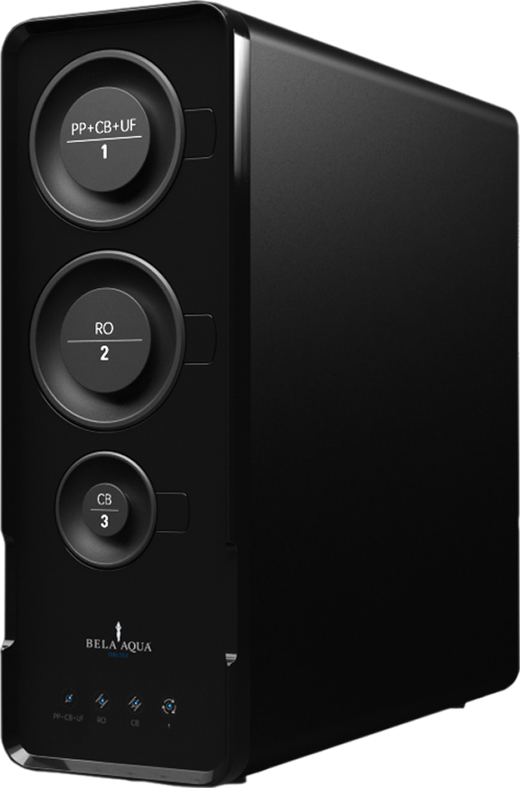
The Bela Aqua OBLIGE MineraleThree cartridges, seven filter stages, pure water from your own tap
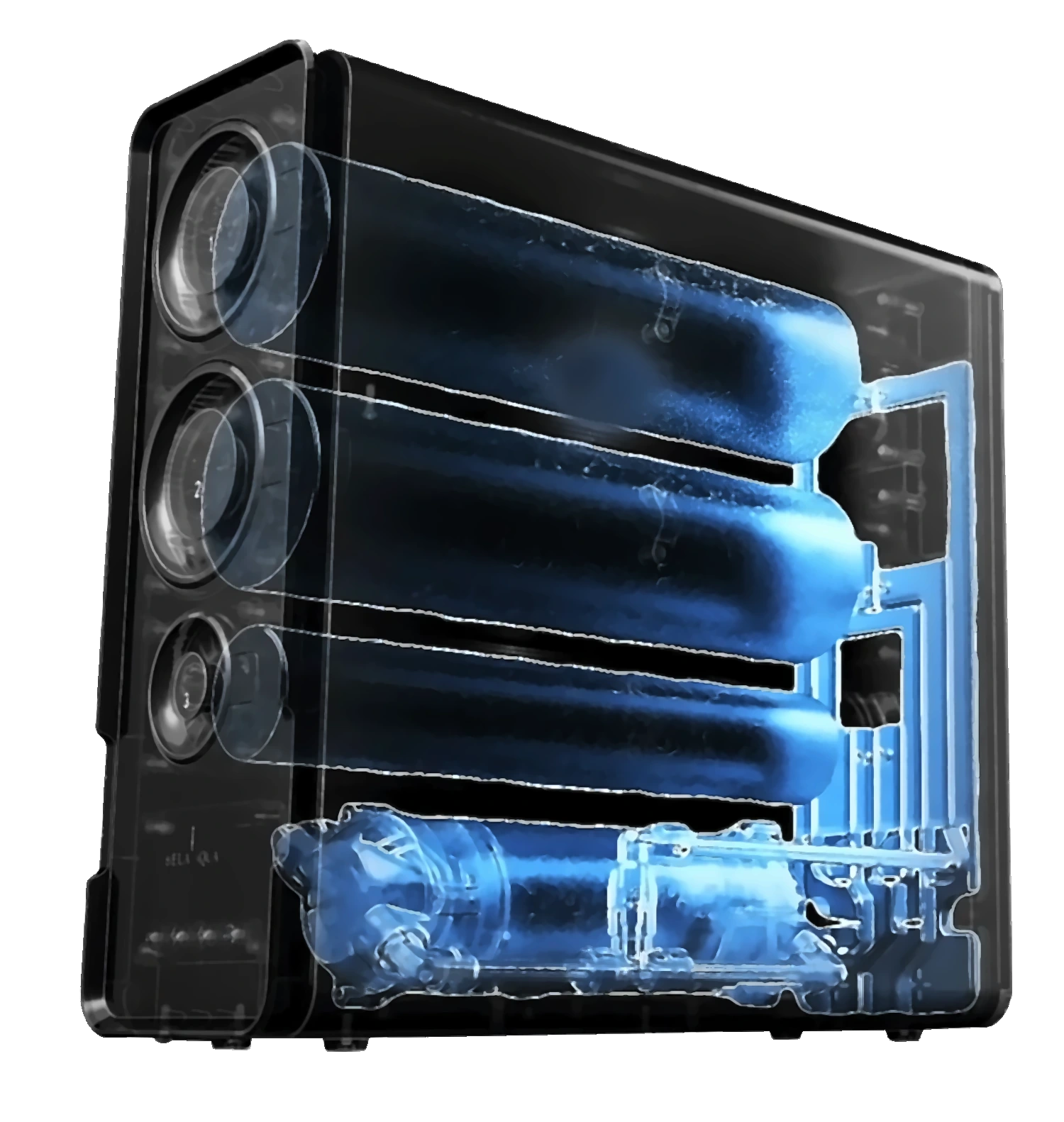
Inside view of the OBLIGE (rendering by Bela Aqua): three horizontal cartridges stacked on top of each other, the pump beneath them and, at the back, the plate with the water channels.

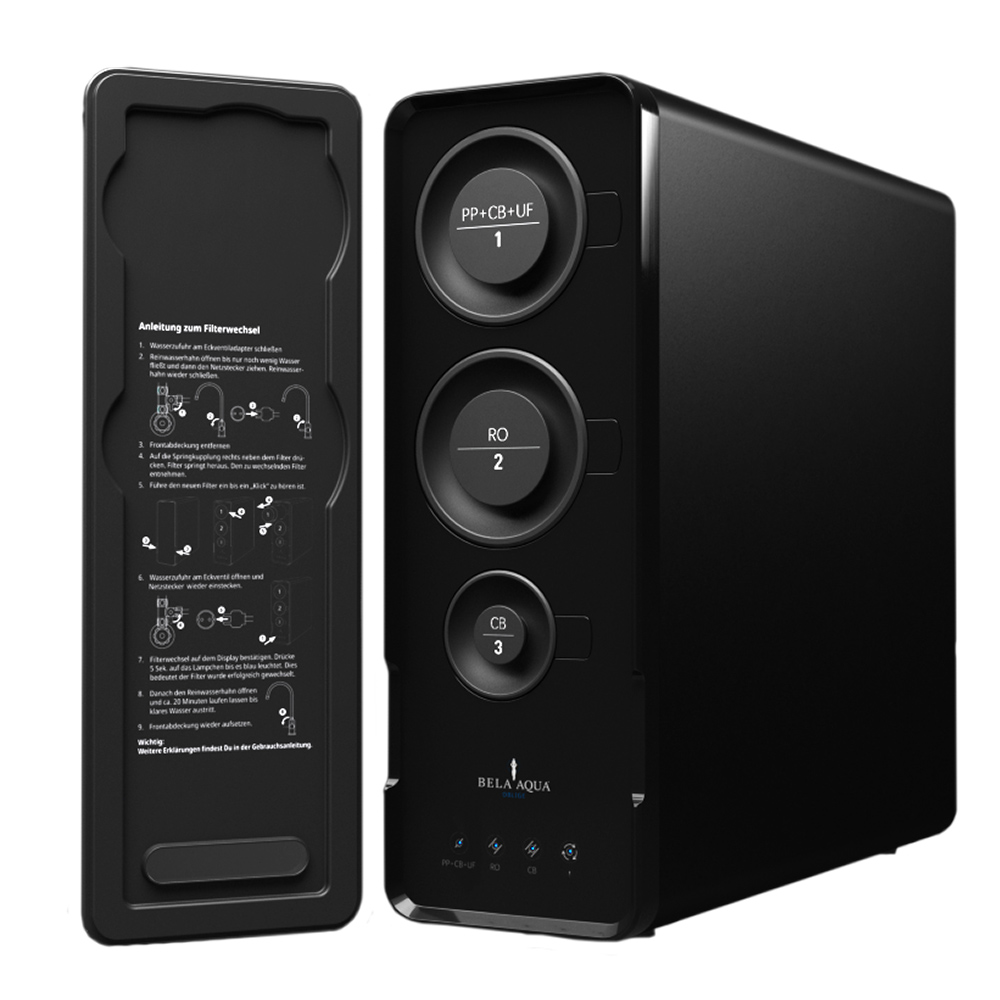
Loading 3D model …

How a filter change works: Close the water supply and unplug the unit, remove the front cover and press the button next to the filter. The filter pops out. Slide the new filter in until it clicks, confirm on the display and let the water run for about 20 minutes.

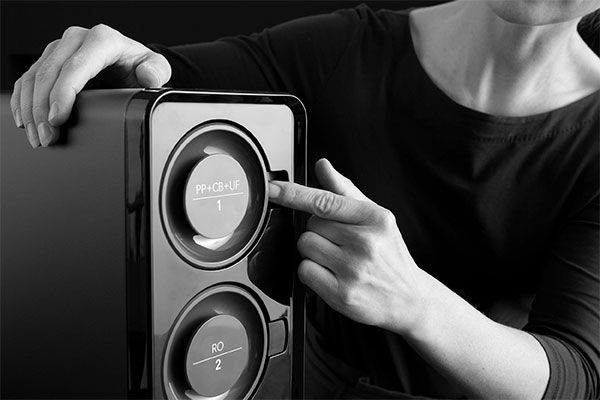
Cartridge 1 in cross-section: Starting from the connection, first the sediment fleece (PP) for sand and rust, then the activated carbon block (CB) for chlorine and chemicals. At the front sits the ultrafiltration (UF), made of fine hollow fibres, as a germ barrier.

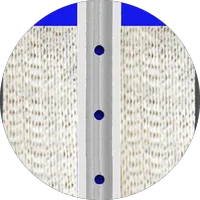
RO membrane in cross-section: Several membrane layers are wound around the collection tube. The pump pushes the water through the membrane, and the purified water travels between the layers to the collection tube in the centre. Dissolved substances are held back and go to the drain with the flush water.

Cartridge 3 in cross-section: First coconut activated carbon (CB) for taste, then mineral beads (MI) that release calcium and magnesium. At the front, ultrafiltration (UF) again, as a germ barrier before the tap.

Inlet: The tap water enters the system at the back. Before that, it flows through the Eneraktiv S, which is mounted on the outside of the pipe.

Cartridge 1: The water flows from the connection to the front through sediment, activated carbon and germ barrier, then back through the centre. Sand, chemicals and germs stay in the layers.

Pump and cartridge 2: The pump raises the pressure. In the membrane, only water reaches the collection tube in the centre. The system flushes dissolved substances along the edge to the drain with a little water.

Cartridge 3: The pure water flows through coconut carbon, picks up minerals and passes the germ barrier. Then it goes to your tap.

First · at the inlet

Eneraktiv S

  • Included with the OBLIGE. Mounted on the outside of the water pipe upstream of the system, needs no power and no maintenance
  • Is intended to revitalise the water and restore its original structure
  • Is intended to change how limescale adheres, so that limescale comes away more easily
  • Optional at the tap: the VIVO water vortex unit swirls the filtered water, modelled on a mountain stream
Step 1 · Cartridge 1

3-in-1 combination filter

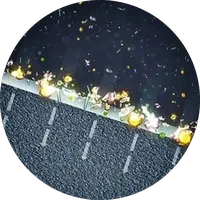
  • Sediment filter (PP): sand, dirt, rust, asbestos fibres, humic substances, suspended solids, corrosion, deposits
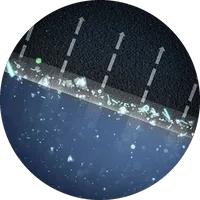
  • Activated carbon block filter (CB): chlorine, chemicals, benzene, fluorine, glyphosate, hormones, drug residues, microplastics, heavy metals, pesticides, organic compounds
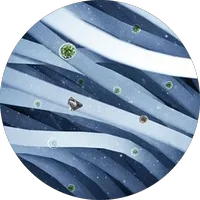
  • Ultrafiltration (UF), germ barrier: viruses, bacteria, algae, colloids
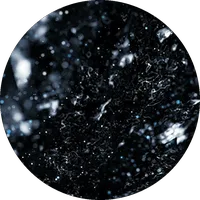
Detail image of the PP sediment filter: dirt particles stay trapped on the surface
PP · Sediment
Detail image of the activated carbon block: substances attach themselves to the carbon
CB · Activated carbon
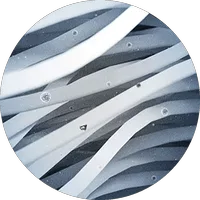
Detail image of the ultrafiltration: germs stay trapped on the hollow fibres
UF · Germs
Step 2 · Cartridge 2 · The heart of the system

Reverse osmosis membrane, 800 GPD

  • Holds back dissolved substances: heavy metals such as lead, salts and limescale, nitrate, drug residues and PFAS, as well as viruses and bacteria
  • The system flushes what has been held back to the drain: for every 1 litre of pure water there are 0.6 litres of flush water
  • Up to 2.1 litres of pure water per minute, with no storage tank
Longitudinal section of the RO cartridge: membrane wound around the collection tube
Spiral-wound membrane with collection tube
Step 3 · Cartridge 3

BIO-3+ filter

  • Coconut activated carbon (CB): rounds off smell and taste and binds residues from chlorination such as chloroform
  • Remineralisation (MI): returns calcium, magnesium, sodium, selenium and trace elements. The swirling flow inside the filter is intended to release them particularly evenly
  • Ultrafiltration (UF), germ barrier: stops germs from getting back into the system through the tap
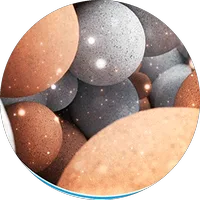
Detail image of coconut activated carbon
CB · Coconut carbon
Detail image of mineral beads
MI · Minerals
Detail image of the ultrafiltration, hollow fibres
UF · Germ barrier
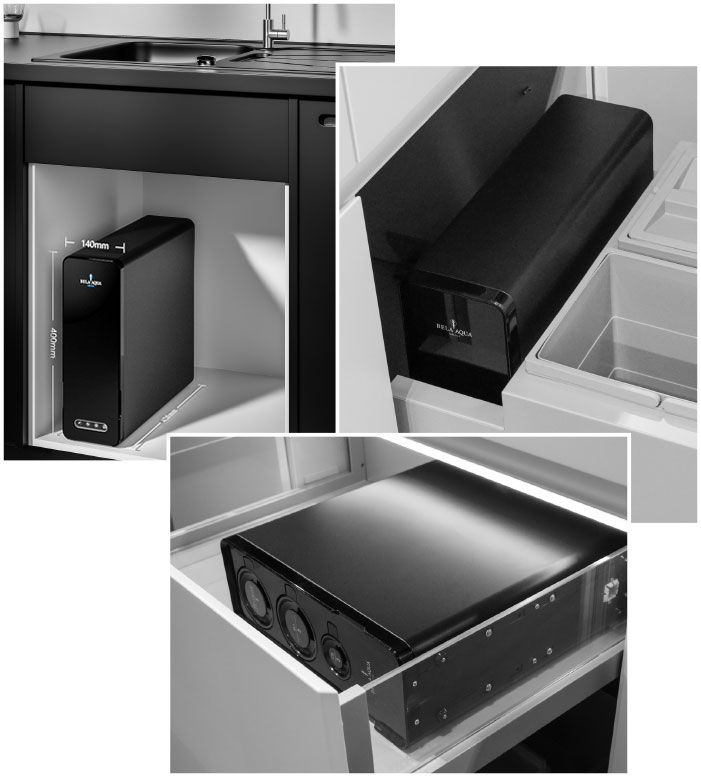
Bela Aqua OBLIGE installed: upright in a base cabinet, measuring 140 mm wide and 400 mm high, lying down in a drawer and under the plinth
Photos: Bela Aqua GmbH
Dimensions
14cm wide
40.5cm high
43cm deep
  • Fits into practically any kitchen: upright in a base cabinet, lying down in a drawer or even under the plinth.
  • Up to seven filter stages sit inside the unit. No additional pre-filters or post-filters are needed outside it.
  • No storage tank, so there is space left in the sink cabinet.
  • Can also be fitted retrospectively in existing kitchens.

How the OBLIGE reverse osmosis system is connected

  1. Cold water angle valve: the OBLIGE connects to your existing cold water pipe
  2. AquaStop: shuts off the inlet if there is a leak (included)
  3. Eneraktiv S: on the outside of the inlet, no power needed (is intended to revitalise the water)
  4. OBLIGE Minerale: only 14 cm wide, no storage tank, leak sensor built in
  5. Separate pure water tap: a design tap next to your existing mixer tap unit, up to 2.1 litres per minute
  6. Flush water to the drain: 0.6 litres per litre of pure water, connected at the trap
  7. Power for the booster pump from the socket in the cabinet

Inside view, detail images, layer structure, installation photos and dimensions: Bela Aqua GmbH (bela-aqua.de, OBLIGE RO Directflow). Water paths inside the unit, connections and animation are simplified.

Tested & awarded TOP 100 Top Innovator 2022 NSF WRAS Approved Product FDA UL RoHS CE
What do you use now?

Carrying crates, refilling the jug, boiling. It costs time and money.

Bottled water

You pay for it, carry it and take the empties back. There is no PFAS limit value for mineral water, whereas for tap water there has been one since January 2026. GLOBAL 2000 found TFA in 14 of 23 Austrian mineral and medicinal waters. In water from plastic bottles, researchers counted around 240,000 plastic particles per litre, mostly nanoplastics.

Sources: Mineral and Spring Water Ordinance (in German); GLOBAL 2000 and AK OÖ, February 2025 (in German; below known health guide values); Qian et al., PNAS 2024
Filter jug

Mainly improves the taste and reduces limescale. The cartridge needs to be replaced regularly. For dissolved substances such as TFA, the German Environment Agency (Umweltbundesamt) names only methods such as reverse osmosis.

Source: Umweltbundesamt, TFA FAQ (in German)

Boiling

Boiling kills germs. Dissolved substances such as lead, nitrate or TFA do not evaporate, though. Because water evaporates, their concentration in the pot actually rises.

Doing nothing

The water looks clear and tastes normal. You cannot see or taste what is dissolved in it. That is exactly why we measure.

Bela Aqua

Pure water from your own tap, as much as you like. No carrying, no bottle waste. Installed by a professional, and you change the filters yourself without a technician.

Do the maths

What does bottled water cost you per year?

€548
is what you spend on bottled water per year
1,095 kg
is what you carry home every year
730
bottles of 1.5 l that you take to the deposit machine
€5,475
in ten years, with no price increases. Worked example using your figures.

Before you carry any more crates: test what comes out of your tap.

Free, with no obligation. We measure right at your tap, and you see the result straight away.

Book your free water test
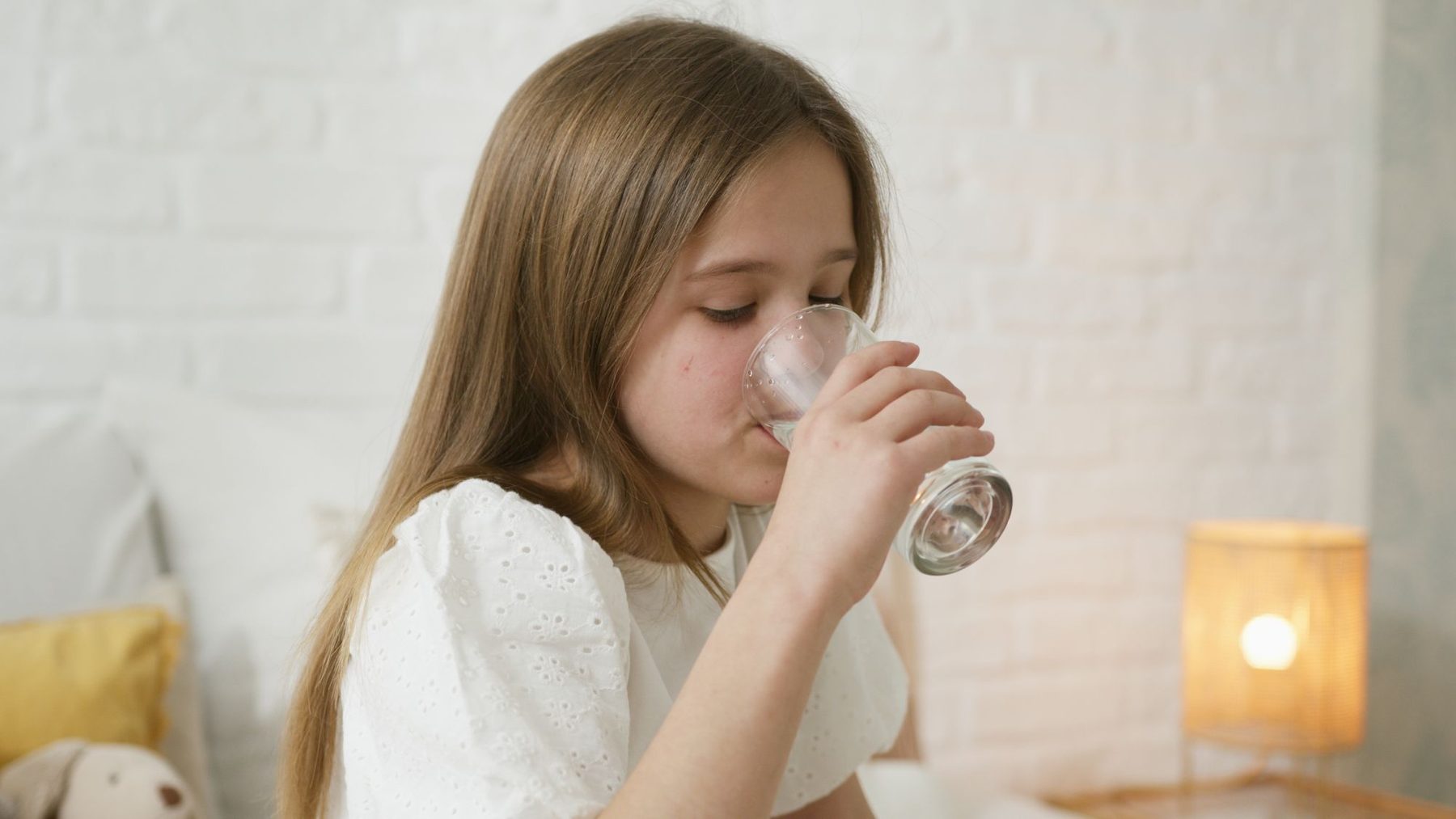
Girl drinking a glass of water
Customer review
★★★★★

“My 4 children are also completely delighted with the water quality. Since then I no longer get limescale when boiling water, and the tea tastes great […]”

Susanne H., Dinkelsbühl
What matters

How to recognise a good reverse osmosis system.

There are plenty of reverse osmosis systems. These nine points decide whether a system suits you and keeps running reliably for years.

What to look forHow the OBLIGE Minerale does it
Enough water when you need itFor cooking and for filling a carafe, the purified water should flow quickly.
Up to 2.1 litres per minute, freshly filtered, without a storage tank
A pre-filter that protects the membraneSand, rust and chemicals should never reach the membrane in the first place.
3-in-1 combination filter: sediment, activated carbon and ultrafiltration in one cartridge, developed in-house by Bela Aqua
A high-performance membraneIt is the heart of the system and holds back dissolved substances such as TFA.
Reverse osmosis membrane rated at 800 GPD
Minerals back into the waterReverse osmosis also holds back calcium and magnesium.
The mineral stage in the BIO-3+ filter returns calcium, magnesium and trace elements
A germ barrier at the outletSo that no germs travel back into the system through the tap.
Ultrafiltration as the last stage before your tap
Protection against water damageA leak under the sink is often noticed late.
Leak sensor with AquaStop shuts off the water supply immediately
Filter changes without a technicianYou should be able to change the cartridges yourself.
Remove the front cover, unlock the cartridge, push in the new one until it clicks. A light shows when a change is due
Fits under your sinkSpace in the cupboard under the sink is tight.
Only 14 cm wide
Installation and support on siteA professional installs it and helps if questions come up.
Installed by a technician, supported through the Bela Aqua service network in Austria

Product information: Bela Aqua GmbH (bela-aqua.de, as of October 2026). Remineralisation stage in the Minerale and Brillance variants.

Which system suits your water? The free water test at your home will show you.

Book your free water test
Safety and hygiene

Safe, even when you’re not at home. Three safety features.

A system under the kitchen sink runs day and night. It should be safe even when you are at the office or on holiday.

Leak sensor with AquaStop

The sensor sits in the base of the system. It detects leaks inside and outside the unit.

In the event of a leak or malfunction, the AquaStop closes all valves and stops water production. The system also alerts you with light and sound.

Autoflush every 24 hours

The system flushes its filters automatically every 24 hours. That applies even when you are not at home, for example on holiday.

You can also start a flush of the filters and membrane at any time at the touch of a button on the touchscreen.

Eco-Stop after 30 minutes

If the tap is left open, the system switches itself off automatically after 30 minutes.

Illustration of the leak sensor in the base of the OBLIGE
Illustration of the leak sensor: Bela Aqua GmbH
Design
“The OBLIGE needs only five connection points, in contrast to other systems that can have 40 connections or more …”

Bela Aqua GmbH, bela-aqua.de, OBLIGE RO Directflow product page (in German).

The water flows through a “water flow bed” made in one piece. As a result, no hoses, switches or connectors are fitted inside the housing. Every connection point carries the risk of a leak.

Product details: Bela Aqua GmbH (bela-aqua.de, OBLIGE RO Directflow, as of October 2026).

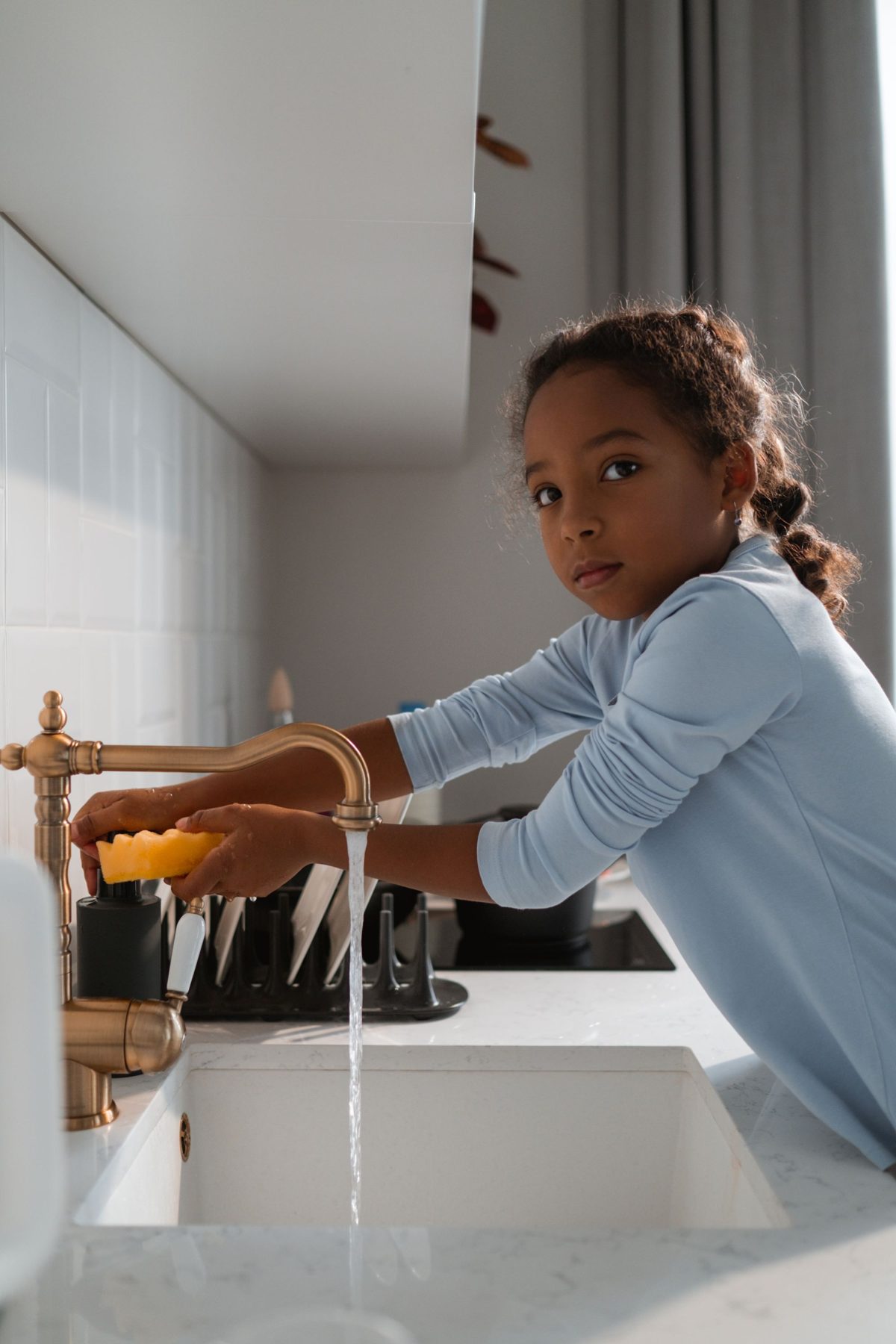
Girl at the kitchen tap
From Austria
★★★★★

“It is an indescribably wonderful feeling to simply turn on the tap and know: we have water as good as anyone could wish for!”

The W. family, Stang, AustriaTest my water
Filter change

Filter change in 3 steps. No technician needed.

With the OBLIGE, you change the filters yourself using the Soft-Clip method, with no technician. The short version in three steps:

A hand presses the Soft-Clip on the first cartridge of the OBLIGE
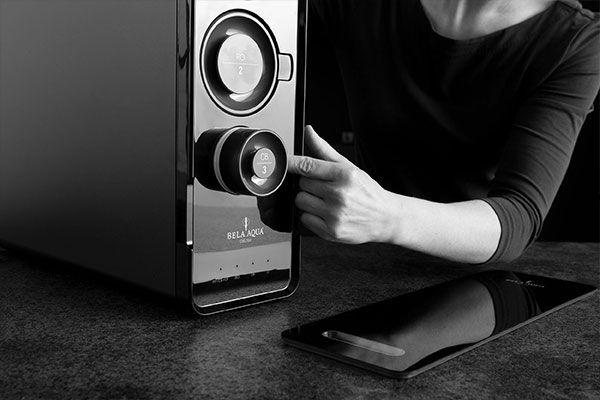
A hand inserts a numbered cartridge into the OBLIGE
Photos: Bela Aqua GmbH
  1. Press the Soft-ClipA light press on the Soft-Clip releases the used cartridge.
  2. Remove the cartridgeTake the cartridge out by its handle.
  3. Insert the new cartridgeChoose the cartridge with the matching number. It clicks into place by itself.

Before the change: Bela Aqua asks you to follow the filter change instructions in the user manual or on the front panel of the system. You will find the full procedure, including shutting off the water, unplugging the system and confirming on the display, in the 3D view of the OBLIGE under the “Filter change” tab.

Product details: Bela Aqua GmbH (bela-aqua.de, OBLIGE RO Directflow, section “Easy do-it-yourself filter change”, in German).

Sascha F., Bela Aqua customer
★★★★★

“Two filter changes, one a year, and perfectly flawless operation in between. […] It is simply a pleasure to speak on the phone to members of your team.”

Sascha F., Rosbach
The systems

Out of sight under the sink. The test shows which one suits you.

No tank · DirectflowBela Aqua OBLIGE reverse osmosis system

OBLIGE

Freshly filtered, at the very moment you need it
  • Directflow without a storage tank, 2.1 litres per minute
  • Just 14 cm wide, fits into almost any under-sink cupboard
  • Leak sensor with Aqua-Stop shuts off the water supply immediately if there is a leak
  • Economical: for every 1 litre of pure water, 0.6 litres of flush water
ClassicPure reverse osmosis water
Minerale+ 3-in-1 mineral filter
Brillance+ mineral filter and Eneraktiv
With tankBela Aqua Evolution reverse osmosis system

Evolution

The proven classic with a storage tank
  • Self-priming, electrically controlled high-performance pump
  • Automatic membrane flushing
  • 5 to 7 filtration stages, depending on the variant
  • Compact: 24.5 × 39 × 39 cm
ClassicPure reverse osmosis water
Minerale+ mineral stage
Brillance+ mineral stage and Eneraktiv
Professional installationA technician installs the system in your home. You do not have to worry about a thing.
Filter change without a technicianYou replace the cartridges yourself, in a few simple steps.
Its own tapPure water comes from its own slim tap next to your existing mixer tap.
Service in AustriaAdvice and support through the Bela Aqua service network.

We decide which system suits you after the measurement, not before.

Free, with no obligation. We measure right at your tap, and you see the result straight away.

Book your free water test
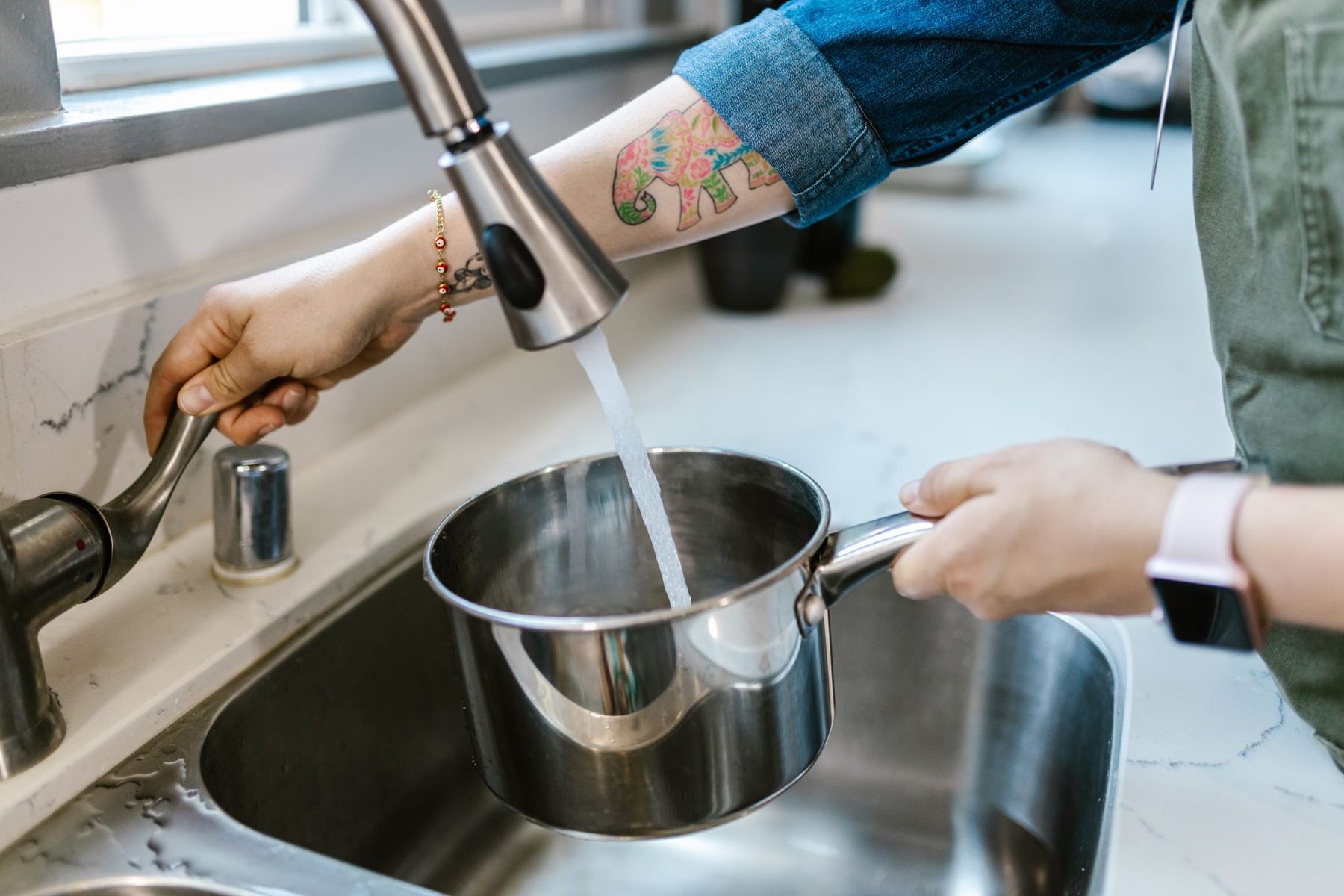
A cooking pot being filled with water at the tap
Review of the OBLIGE Minerale
★★★★★

“[…] we are super happy. […] the water tastes excellent, on its own or in tea and coffee. We also use it for cooking and washing salad.”

Johannes Harling, uses the OBLIGE Minerale
The cartridges at a glance

7 filter stages in 3 cartridges. Classic and Minerale compared.

All the filter stages sit inside the unit. Cartridges 1 and 2 are the same in Classic and Minerale. For the third cartridge, you choose one of two variants.

CartridgeOBLIGE Classic5 filter stagesOBLIGE Minerale7 filter stages
1PP + CB + UFSediment, activated carbon block and ultrafiltration as a germ barrier at the inletsame as Classic
2RO membrane, 800 GPDThe reverse osmosis membranesame as Classic
3Activated carbon post-filter (CB)Coconut-shell activated carbon for odour and tasteMineral-Bio+ filter (CB + MI + UF)Activated carbon, remineralisation and germ barrier in one cartridge
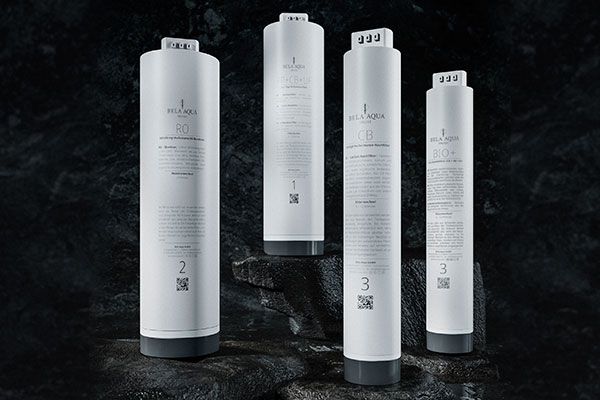
Four OBLIGE filter cartridges side by side: RO, PP+CB+UF, CB and Bio+
Photos: Bela Aqua GmbH

Product details: Bela Aqua GmbH (bela-aqua.de, OBLIGE RO Directflow, “7-in-3 filter technology at a glance”, in German). PP = sediment, CB = activated carbon block, UF = ultrafiltration, MI = mineral stage, GPD = gallons per day. The Brillance adds the Eneraktiv to the Minerale (see systems). The cards above show exactly what each filter stage holds back.

Technical data

The OBLIGE in numbers. The technology at a glance.

All 14 specificationsDesign, output, pump, safety, dimensions
FeatureSpecification
DesignDirectflow, no tank needed
Filtration rateup to 2.1 litres per minute*
Filter changefilters that are quick and easy to replace
Installationupright or lying down
RO membranehigh performance, 800 GPD**
Monitoringreplacement monitoring for filters and membrane
Filter stages5 to 7, as chosen
Pumppowerful, with twin-head pressure boosting
Controleconomical, for particular efficiency
Membrane flushingautomatic cleaning flush
Waste water ratio0.6 litres per litre of pure water*
Safetyleak sensor included
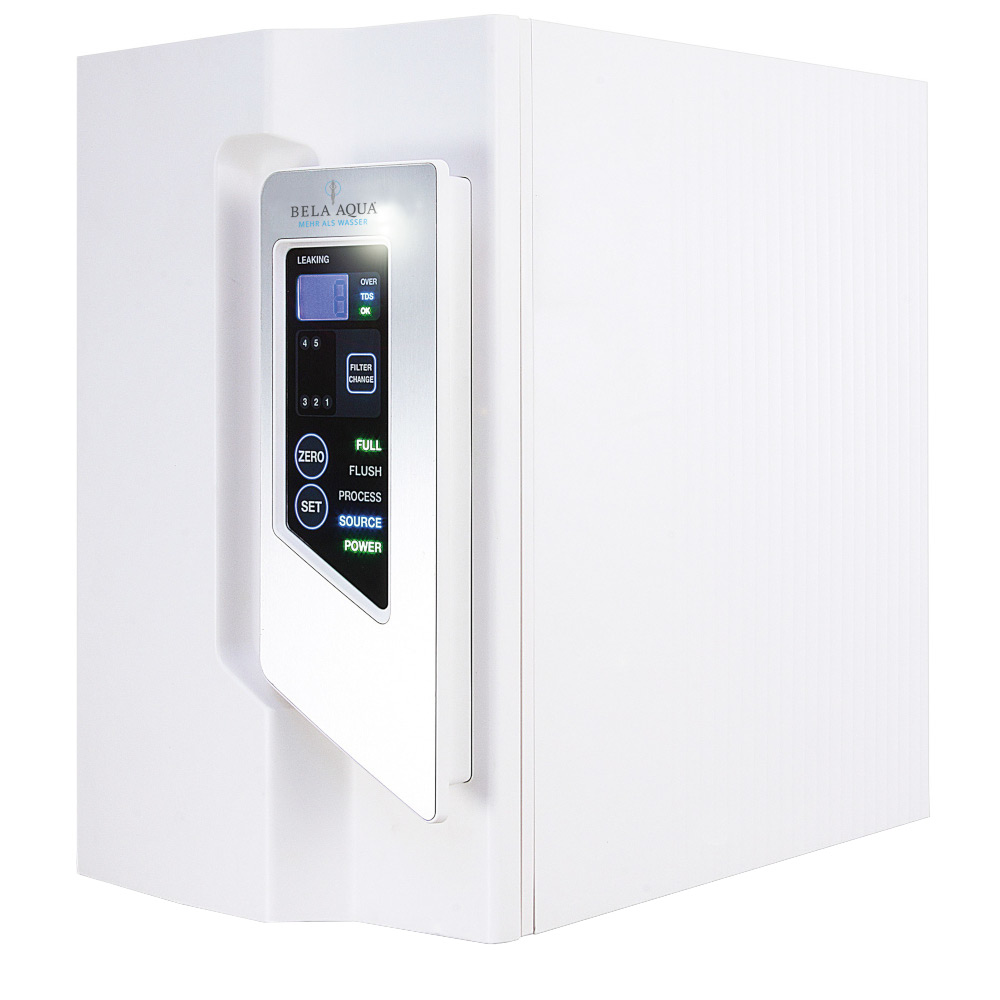
Operationoperation and monitoring via LCD display
Width14 cm (for height and depth, see the dimensions above)

* Depending on the temperature and pressure of the inlet water and on how saturated the filters are. ** GPD = gallons per day. All figures: Bela Aqua GmbH (bela-aqua.de, OBLIGE RO Directflow, “Technical details at a glance”, in German, as of October 2026).

What customers say

Part of everyday life.

★★★★★

“There is always a jug of water on our table. We love it, and so do the children. […] Lugging crates around is a thing of the past, too.”

Markus T., Chemnitz
★★★★★

“I only drink coffee or tea at home now, because the coffee doesn’t taste right anywhere else.”

Bettina K., Essen
★★★★★

“The fitter installed our reverse osmosis system today and we are more than satisfied. He was very friendly, explained everything well, and worked cleanly and neatly.”

The Siegl family, Seehausen am Staffelsee
Videos

The OBLIGE on film. Three videos from Bela Aqua.

The films come from Bela Aqua’s YouTube channel and are in German. They only load when you click a thumbnail.

Technology that inspires and redefines the future of reverse osmosis technology and membrane filtration.Title as on YouTube (translated), Bela Aqua channel · Watch on YouTube
The OBLIGE from Bela Aqua embodies the future of Directflow technology.Title as on YouTube (translated), Bela Aqua channel · Watch on YouTube
Enjoy pure, clean water straight from your tap. The Bela Aqua OBLIGE guarantees it.Title as on YouTube (translated), Bela Aqua channel · Watch on YouTube

Playing a video sends data to YouTube. Videos and titles: Bela Aqua GmbH.

The test at your home shows what the system would do for your water.

Free, with no obligation. We measure right at your tap, and you see the result straight away.

Book your free water test
In the shower too

Hard water and babies’ skin. What studies show.

Newborn baby wrapped in a white cloth, with the smiling mother beside them
Babies and eczema
1,303 babies

In England and Wales, three-month-old babies from households with hard water had visible eczema markedly more often. Water counted as hard if it was above the study’s median value, which is around 14 °dH (German degrees of hardness). The study shows an association, not proof of the cause.

Perkin et al. 2016, Journal of Allergy and Clinical Immunology (DOI)
Soap and limescale
80 people

After washing with hard water, more soap stayed on the skin and irritated it more, especially in people with atopic dermatitis. With softened water the effect was smaller.

Danby et al. 2018, Journal of Investigative Dermatology (DOI)
To be fair
No proof yet

It has not been shown that softer water prevents eczema. A water softener brought no benefit for 336 children with eczema. A pilot study with babies was too small to draw a conclusion.

Thomas et al. 2011, Health Technology Assessment (DOI); Jabbar-Lopez et al. 2021, Clinical & Experimental Allergy (DOI)
How hard is your water?

Water hardness in Vienna: the mountain spring water is soft to medium-hard, at 6 to 12 °dH. In the surrounding area it is often harder, for example in Mödling at 19 °dH, in Schwechat at up to 20 °dH and in Perchtoldsdorf at 26 °dH. The line at 14 °dH marks the level above which water counted as hard in the study from England and Wales.

Sources: City of Vienna, water hardness; water values from the municipalities and EVN Wasser, accessed October 2026.

Bela Aqua Ondée shower filter head
From Bela Aqua

Ondée shower filter

  • Activated carbon fibre filter, reduces chlorine residues
  • Replacement filter every two to three months
  • Optional aroma replacement filter, for example with a lavender or lemon scent

Good to know: Activated carbon holds back chlorine, but not limescale. The shower head does not change the hardness of the water.

Ask about it at your water test.

A mother hands her daughter a glass of water in the kitchen
Customer review
★★★★★

“We drink a lot more now, because it is so much nicer to drink and we can feel good about it. On top of that, we save the cost of expensive mineral water.”

Birgit D., LeutkirchBook your free water test
Your free water test

We test your water straight from your tap. You see the result immediately.

Worth about €80for you €0free, no obligation
  • Nitrate level
  • Conductivitydissolved substances in µS/cm
  • Hardness level and limescale
  • Saturation of the water

TFA, PFAS, pharmaceutical residues and microplastics can only be measured in a laboratory. At the appointment, I’ll explain what reverse osmosis does about them.

  1. Fill in the formTakes less than two minutes.
  2. Choose a timeStraight afterwards, you pick an available slot, including evenings and weekends.
  3. Test at your homeI test your tap water straight from the tap. You see the result immediately.
  4. You decideI explain the readings to you. Whether you want a system afterwards is entirely up to you, and you can take your time.
Step 1 of 3Takes under 2 minutes

Where should we test your water?

Older buildings often have older pipes. This helps us prepare.

What matters most to you about your water?

You can choose more than one.

How can I best reach you?

In the next step you choose your appointment. No sales calls.

Please choose an option.

Free No obligation Result immediately ★ 4.8 on Google (145 reviews)
Frequently asked questions

Glad you asked.

Can you drink tap water in Vienna? Isn’t it excellent anyway?

At the source and in the mains: yes. Wiener Wasser publishes its measured values on an ongoing basis, and they are good. But the pipes inside your building are the building owner’s responsibility, and for substances such as TFA or drug residues there is no limit value in the Austrian Drinking Water Ordinance.

The water test shows you how your water measures up on nitrate, hardness and dissolved substances, right at your tap. TFA or drug residues can only be determined in a laboratory. The reverse osmosis membrane does hold back substances like these, though.

Isn’t mineral water the safer choice?

Not automatically. Since January 2026, a limit value for 20 PFAS has applied to tap water. The Austrian Mineral Water Ordinance lists limit values for 15 naturally occurring substances such as arsenic, lead or nitrate. PFAS and TFA are not among them. Mineral water must come from a protected source and be of “original purity”.

In early 2025, GLOBAL 2000 and the Upper Austrian Chamber of Labour had twenty-three Austrian mineral and medicinal waters tested. The laboratory found TFA in 14 of them, with values below the currently known health guideline values. On top of that come plastic particles from the bottle, the lugging and the cost.

Which water should I use for my baby’s bottle?

With mineral water, only choose one labelled “suitable for the preparation of infant food”. Only then do stricter maximum values apply, such as 10 mg/l nitrate and 20 mg/l sodium. For ordinary mineral water from Austria, up to 25 mg/l nitrate is permitted.

With tap water: do not use water that has been standing in the pipes for a long time, for example overnight. Let it run until it turns noticeably colder. This is what Wiener Wasser recommends where there are lead pipes. At the free water test, we measure how much nitrate your water contains, right at your tap.

What exactly is measured in the water test?

Nitrate, conductivity, hardness level and limescale, plus the saturation of the water. We measure directly at your tap and you see the result immediately.

Is the test really free? Do I have to buy anything afterwards?

The test is worth about €80 and is free for you, with no obligation. You get your result and an honest assessment. Whether you want a system afterwards is entirely up to you.

Why is the test free?

Because I would like to use the opportunity to show you what a Bela Aqua system does to your water. Whether you want one is up to you. You get your measurement result either way.

Doesn’t reverse osmosis water lack minerals?

The membrane also holds back minerals. That is why there are the Minerale and Brillance variants: a mineral filter returns calcium, magnesium and trace elements to the water. We discuss which variant suits you at the test.

Will a system like this fit in my kitchen?

The OBLIGE is only 14 cm wide and disappears into the cupboard under your sink. The purified water comes from its own slim tap. At the appointment, we look at the space together.

How much maintenance does it need?

Little. You change the filters yourself, without a technician. For the pre-filter, Bela Aqua recommends a change every 6 months in line with DIN 1988. How often the other filters are due depends on your water and how much you use.

How much water is lost during reverse osmosis?

With the OBLIGE, every 1 litre of purified water comes with 0.6 litres of flush water. This is how the membrane flushes out the substances it has held back.

Directflow or tank: which suits me?

Bela Aqua builds both: the OBLIGE without a tank (Directflow) and the Evolution with a tank. Both designs have their merits.

With Directflow, the system only filters when you draw water. That gives higher output in litres per minute and takes up less space. Bela Aqua itself points out one peculiarity: after you open the tap, there is a short start-up time in which the conductivity of the water is slightly higher. Conductivity is a measure of dissolved substances.

With a tank system, a store of filtered water is ready immediately. In return, it needs more space. Which suits you better depends on how much water you regularly need and on the space you have. We discuss this at the water test.

How often do I have to change the filters, and who does it?

Pre-filters and post-filters are usually changed every 6 to 12 months, the RO membrane every 12 to 24 months. This can vary depending on the system and the water.

The OBLIGE monitors the filters and the membrane. Three lights on the display show the remaining life of the filters. You make the change yourself, without a specialist. You can see the three steps in the filter change section.

Does the system need electricity?

Yes. The OBLIGE has a pump and a display. The system needs a power connection near where it is installed, for example a socket in the cupboard under the sink. Bela Aqua’s product page gives no figure for power consumption.

What happens if I am away from home for a long time?

The OBLIGE flushes its filters automatically every 24 hours (Autoflush), even on holiday. If hygiene is particularly important to you, Bela Aqua recommends leaving the system connected.

If safety matters most to you, you can disconnect the system from the power and close the angle valve. If the system has been disconnected for more than 14 days, Bela Aqua recommends disinfecting it before putting it back into operation. The details are in the instructions for use.

What happens if the system starts to leak?

The leak sensor sits in the base of the system. If there is a leak, the AquaStop closes all valves, water production stops and the system warns you with light and sound. More in the Safety and hygiene section.

If you are sure that water is escaping from inside the system, Bela Aqua recommends contacting support.

How much does a system cost?

That depends on the model, the variant and the installation. At the water test you see which system suits your water, and you receive a fixed price. Without obligation.

Who will come to my home?

Christoph Speiser, your Bela Aqua consultant for Vienna and the surrounding area. He measures your water, explains the values and answers your questions. Afterwards, a technician carries out the installation.

Didn’t find your question? Ask it at your water test.

Free, with no obligation. We measure right at your tap, and you see the result straight away.

Book your free water test
Your next step

You drink this water every day. Do you know what is in it?

Two minutes for the form, an appointment at your home, a result you see straight away. Free, with no obligation.